
CAMILLE JOYCE
HARAJUKU STATION, TOKYO
Designing a transition
International workshop- Meiji University (2017)
Harajuku Station sits between two radically different worlds: the forest of Meiji Shrine and the dense commercial streets of Omotesando, especially Takeshita Street.
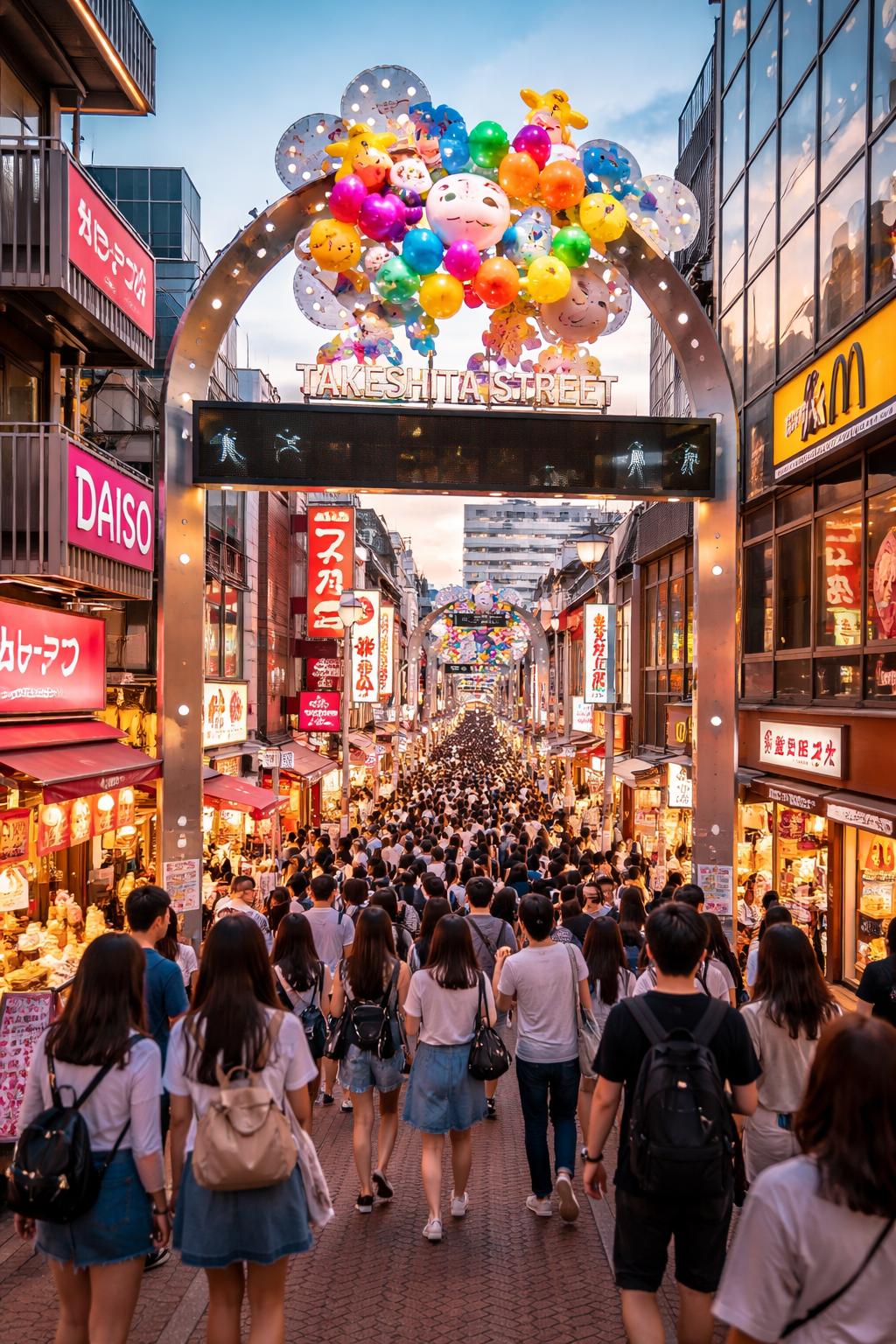
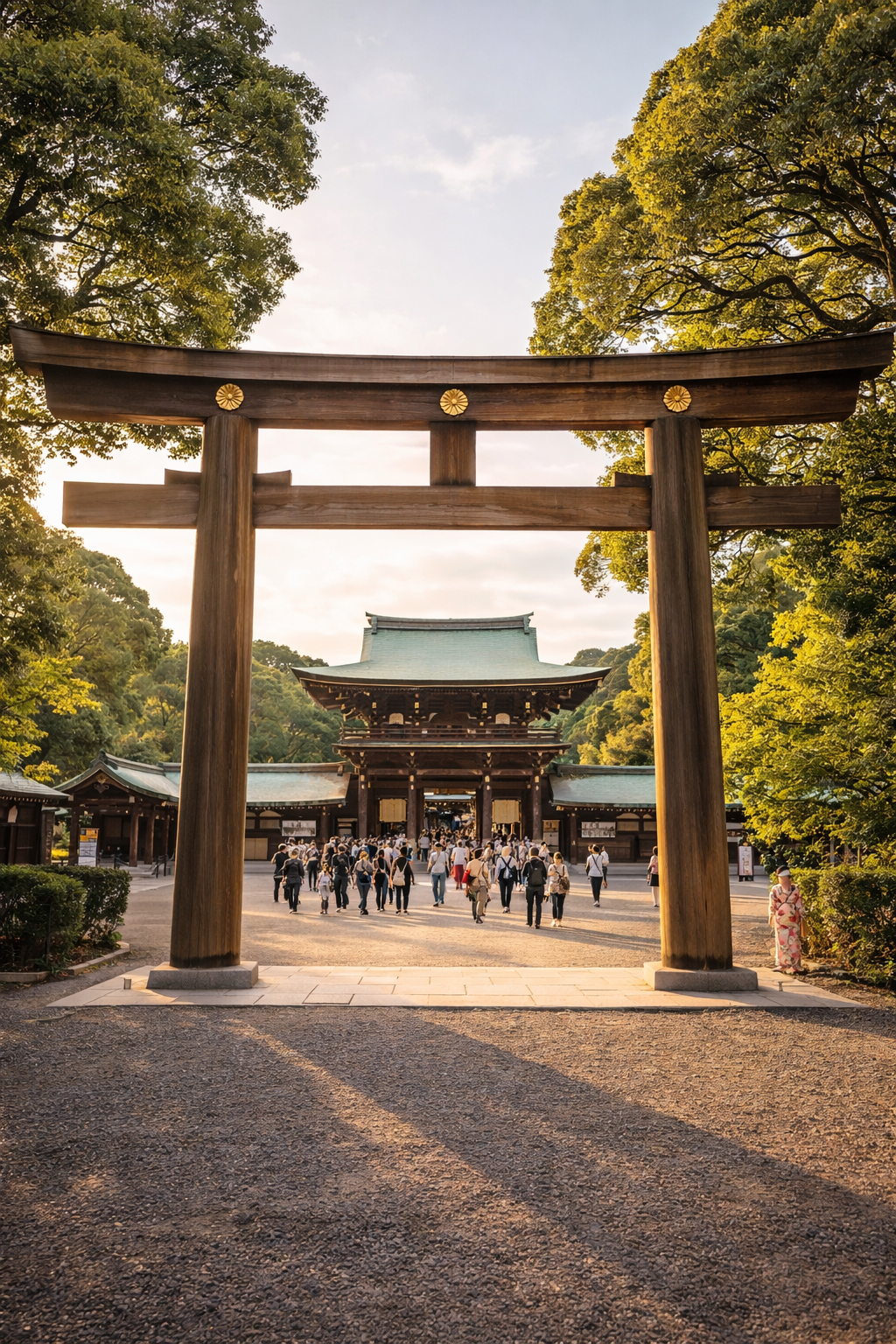
During the one-week workshop, our team explored how the station could become a spatial transition rather than emphasize the divide.
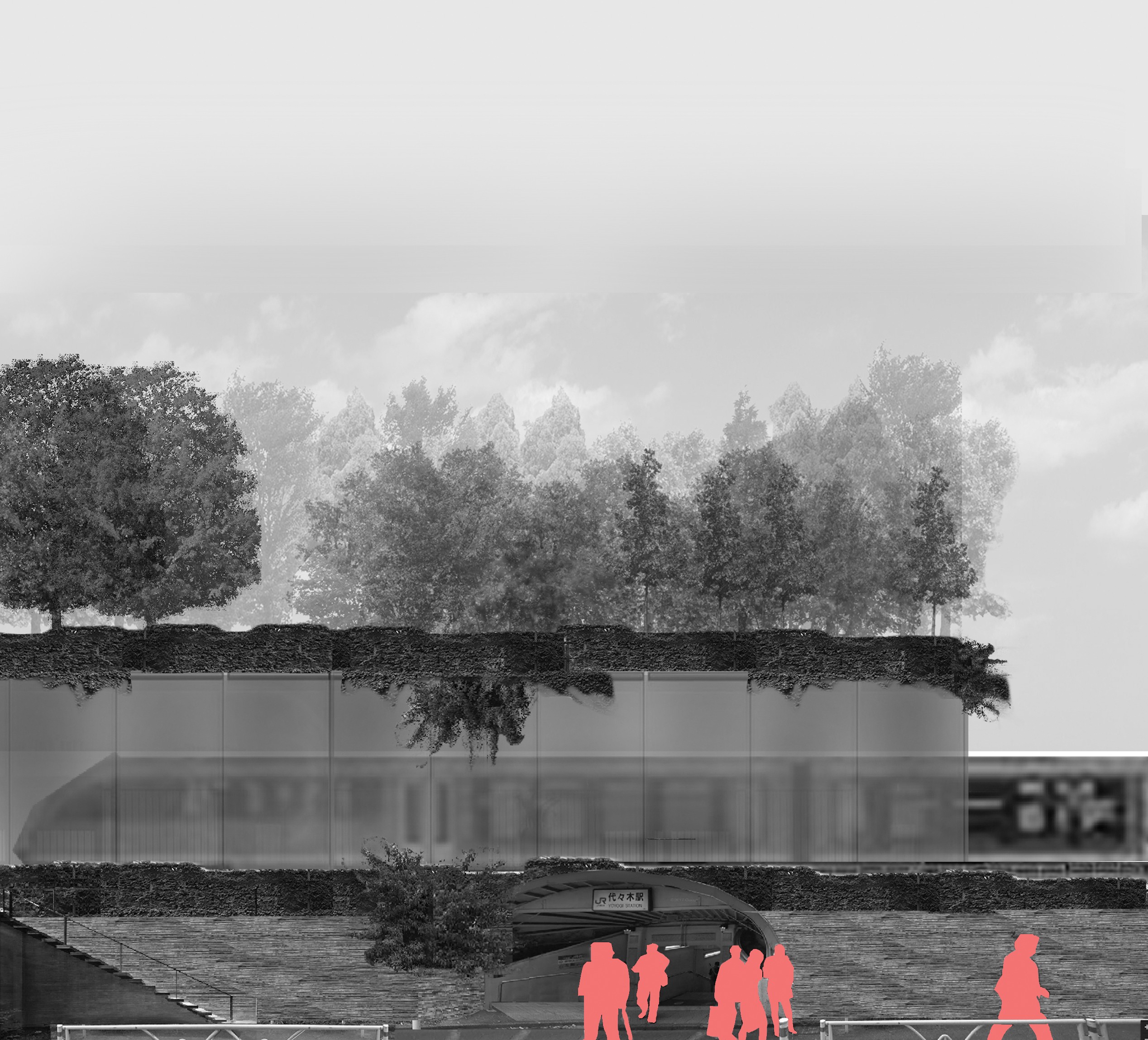
As team lead, I directed the project toward extending the forest over the tracks through an elevated green canopy, while commercial and transit functions remain at rail level. The project creates a vertical overlap between landscape and city.
Movement through the site is organized by a series of small pavilions embedded in the forest, framing views and pauses along the path.
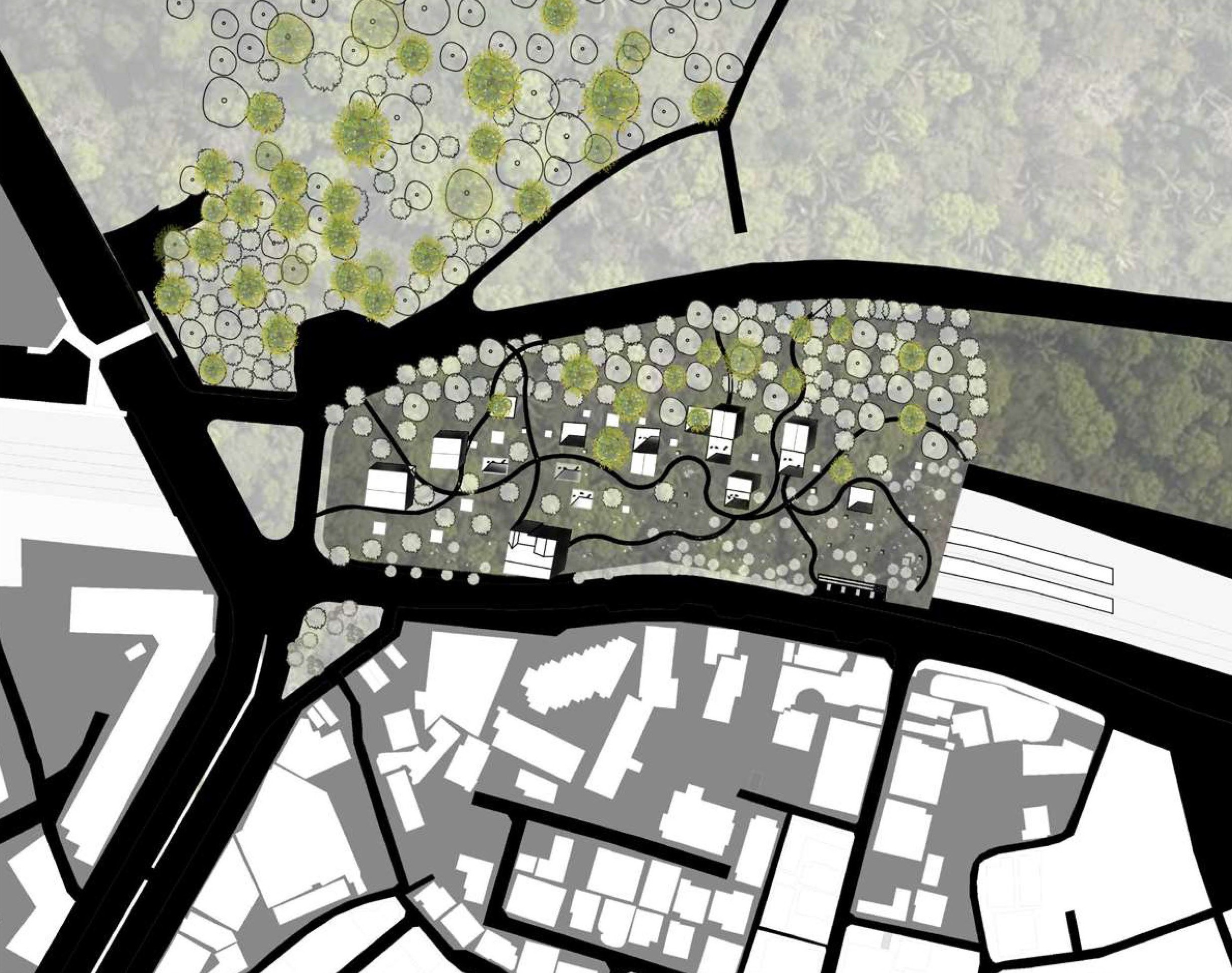
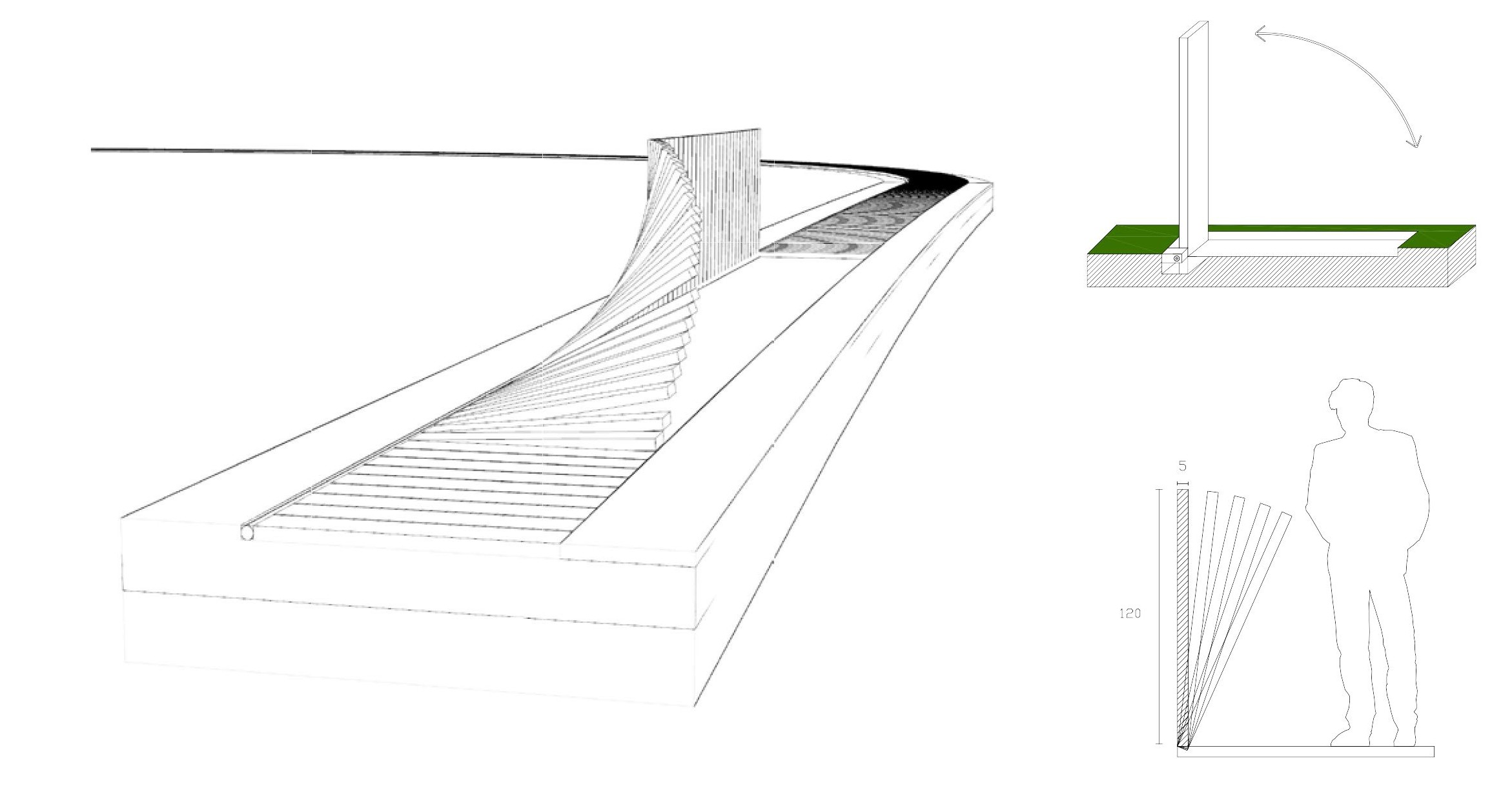
To address nighttime safety, I developed a conceptual kinetic system: an automated wooden walkway. During the day, it operates as a continuous path connecting the pavilions; at night, it transforms into a controlled border.
The project treats architecture as a scenic sequence, where spatial shifts and transformations guide experience.
CAMILLE JOYCE
HARAJUKU STATION, TOKYO
Designing a transition
International workshop- Meiji University (2017)
Harajuku Station sits between two radically different worlds: the forest of Meiji Shrine and the dense commercial streets of Omotesando, especially Takeshita Street.
During the one-week workshop, our team explored how the station could become a spatial transition rather than emphasize the divide.
As team lead, I directed the project toward extending the forest over the tracks through an elevated green canopy, while commercial and transit functions remain at rail level. The project creates a vertical overlap between landscape and city.
Movement through the site is organized by a series of small pavilions embedded in the forest, framing views and pauses along the path.
To address nighttime safety, I developed a conceptual kinetic system: an automated wooden walkway. During the day, it operates as a continuous path connecting the pavilions; at night, it transforms into a controlled border.
The project treats architecture as a scenic sequence, where spatial shifts and transformations guide experience.
CAMILLE JOYCE
HARAJUKU STATION, TOKYO
Designing a transition
International workshop- Meiji University (2017)
Harajuku Station sits between two radically different worlds: the forest of Meiji Shrine and the dense commercial streets of Omotesando, especially Takeshita Street.
During the one-week workshop, our team explored how the station could become a spatial transition rather than emphasize the divide.
As team lead, I directed the project toward extending the forest over the tracks through an elevated green canopy, while commercial and transit functions remain at rail level. The project creates a vertical overlap between landscape and city.
Movement through the site is organized by a series of small pavilions embedded in the forest, framing views and pauses along the path.
To address nighttime safety, I developed a conceptual kinetic system: an automated wooden walkway. During the day, it operates as a continuous path connecting the pavilions; at night, it transforms into a controlled border.
The project treats architecture as a scenic sequence, where spatial shifts and transformations guide experience.